Mamilla and the city center
The best choice for a first stay. A ten-minute walk from Jaffa Gate, restaurants open late, the tram, and the pedestrian district right downstairs.
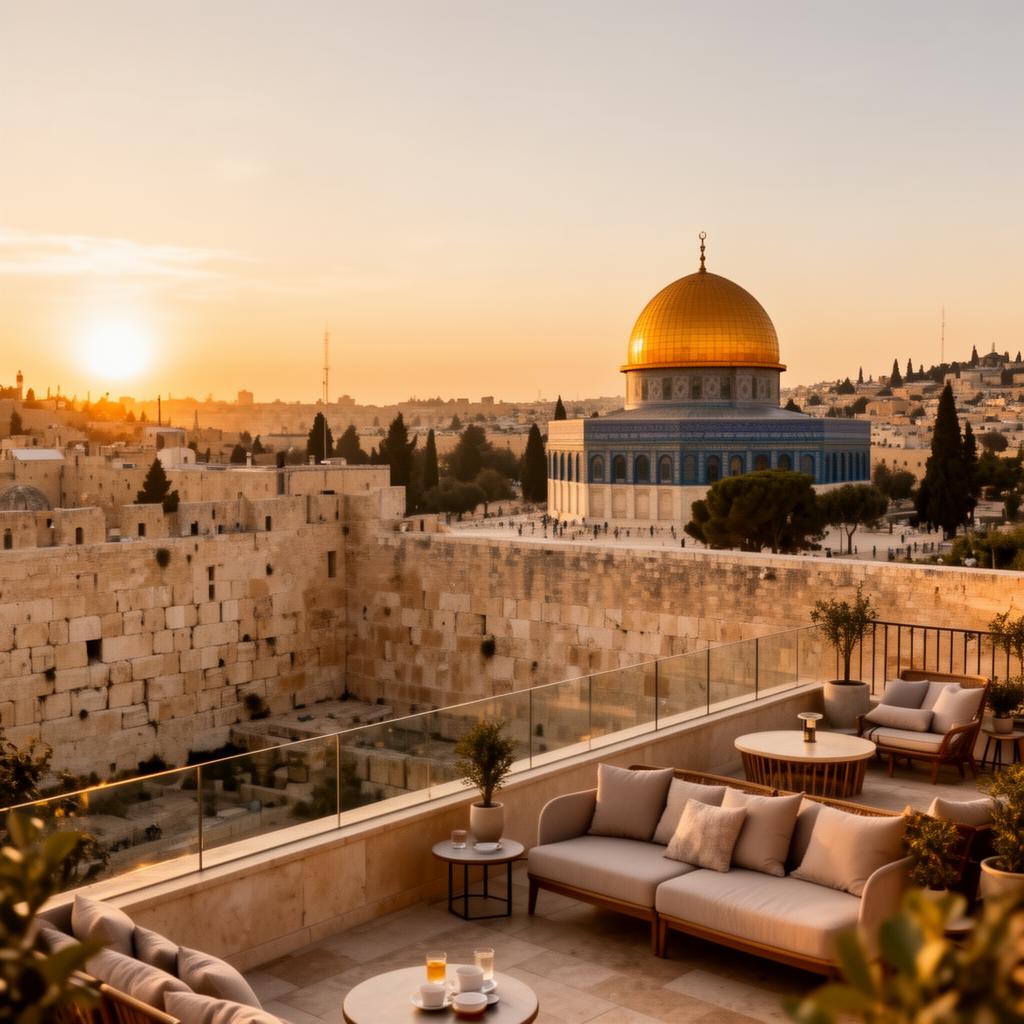
In Jerusalem, location shapes your stay far more than the hotel category. A superb room twenty minutes by bus from the Old City will cost you two hours every day.
The city is spread out, hilly, and experienced on foot. Between the neighborhood where you sleep and the places you came to see, there are climbs, streets that close on Friday afternoon, and distances that look short on a map.
This page is organized by travel profile. Find the one that sounds like you before looking at prices.
Jerusalem offers genuinely good options below €160 per night, provided you accept an extra ten to fifteen minutes of walking.
Simple hotels and guesthouses around the central bus station, in Mekor Baruch, Nachlaot or on the streets descending toward Jaffa Road. Functional rooms, breakfast often included, rarely a view. The tram runs nearby and drops you at the foot of the Old City in a few minutes.
Stays where days are spent outside, solo travelers or couples, pilgrimages, and those who prefer to extend the trip rather than the daily bill.
The actual elevation difference between the hotel and the Old City, which no map shows and changes everything when you walk six hours a day. And the genuine proximity of a tram stop, often advertised more generously than it really is.
In Jerusalem, families rarely look for luxury. They look for space, a kitchen and a quiet neighborhood in the evening.
Apartment hotels and residences with kitchenettes, mainly in Rehavia, the German Colony and around Mahane Yehuda. Connecting rooms, buffet breakfast, sometimes a courtyard or garden. Many French-speaking families choose this option to prepare their meals, especially during the holidays.
Families of four or more, stays of a week or longer, and trips where several generations travel together.
Whether there really is a lift, because many older buildings in Rehavia and Nachlaot do not have one. The actual kitchenette equipment, often limited to a hotplate and microwave. And the possibility of getting two rooms on the same floor rather than two floors apart.
Here, what you are paying for is precise: the distance to Jaffa Gate, and what you see through the window.
Mamilla, the area around Independence Park and the heights facing the walls. Spacious rooms, spa, rooftop terraces overlooking the Old City, and the entrance to the pedestrian district just steps away. This is the only area where you can walk back after a late dinner without thinking about it.
Short stays where every hour counts, trips marking a special occasion, and those who want to be able to return and rest between visits.
Exactly what “Old City view” means, as it sometimes describes an angle from a shared terrace rather than the room. Ongoing construction in an area under constant renovation. And the real supplement for rooms facing the walls, which can double the rate.
The best choice for a first stay. A ten-minute walk from Jaffa Gate, restaurants open late, the tram, and the pedestrian district right downstairs.
Residential, leafy, quiet in the evening. Very popular with families and for long stays. Allow twenty to twenty-five minutes on foot to the Old City.
Stone houses, cafés, Emek Refaim Street. Peaceful and pleasant to live in, but farther away: plan on the bus or tram for visits.
Narrow lanes, a lively market until evening, characterful accommodation. Vibrant and central, sometimes noisy.
The most affordable area, well served by the tram. No particular charm, but practical and close to everything by public transport.
For panoramic views over the city. Out of the center, few restaurants nearby, and transport always required.
In Jerusalem, Shabbat is not a hotel option: it is the rhythm of the entire city. From Friday afternoon to Saturday evening, transport stops, most shops close, and the streets change character. It must be anticipated, not discovered.
The kitchen certification and the rabbinical authority that issues it, the presence of a Shabbat lift and the floors it actually serves, how magnetic keys work from Friday evening to Saturday evening, meal times and whether they must be booked in advance, the availability of a hotplate and hot-water urn, and the hotel synagogue or the nearest one within walking distance.
We check these points property by property before you book. We also tell you the Shabbat start and end times for your dates, and arrange your transfers accordingly: a flight landing late on Friday afternoon requires special organization.
Passover, Rosh Hashanah and Sukkot are the busiest periods of the year in Jerusalem, and the city fills up well before the others. Full-board packages often become mandatory, rates change, and availability closes several months in advance. We will tell you honestly what remains possible and at what price.
Within Jerusalem, a car is more of a handicap than an advantage. Parking is scarce and expensive, the Old City streets are pedestrianized, and the tram serves most of what you want to see.
However, it becomes essential as soon as you leave: the Dead Sea and Masada, Bethlehem, the monasteries of the Judean Desert or the Gush Etzion region cannot be properly visited by public transport. Our usual advice: explore the city on foot, then take a car for excursions, with collection in the city center rather than at the airport.